Description
An AI travel app uses artificial intelligence to understand your accommodation needs in plain language and return real options. The best ones go further — they find live availability and complete the booking for you, without the 14-tab shuffle.
What Is an AI Travel App — and Why Most of Them Can't Actually Book Your Hotel
TLDR
- Most apps that call themselves "AI travel apps" generate suggestions. They don't execute bookings.
- A real AI travel app connects to live hotel inventory, reads your request in natural language, and completes the transaction.
- Booking.com and Expedia are filter-based tools. They put the work on you.
- BookingGPT is an AI travel app that actually books — not just browses.
Table of Contents
- What is an AI travel app?
- What most AI travel apps actually do
- The gap nobody talks about: suggestion vs. booking
- How does an AI travel app find live hotel prices?
- Is an AI travel app safe for hotel booking?
- What to look for in a good AI travel app
- Why I switched from Booking.com to an AI travel app
- The bottom line
What is an AI travel app?
An AI travel app is a mobile or web application that uses artificial intelligence — typically a large language model — to interpret what you want from a trip and translate that into real travel options.
You type something like: "boutique hotel in Lisbon, under $180 a night, check in Friday."
The app reads that as human intent, not as a set of filter checkboxes. It understands context: "boutique" means character and charm, not a chain. "Under $180" is a hard ceiling. "Friday" is a specific date.
Where it gets interesting is what happens next. Some apps stop at suggestions. The best ones go all the way to a confirmed booking.
According to SiteMinder's AI Travel Agent Guide, AI travel agents combine a language model that understands intent, structured travel data like rates and room types, and live integrations that fetch real-time availability. The key word is integrations — without them, the AI is just guessing from cached data.
What most AI travel apps actually do
Here's the honest truth about most AI travel apps in 2026: they're planners, not bookers.
You describe what you want. They generate a list. Then you're on your own.
The typical flow looks like this:
- You type a request
- The app returns hotel suggestions, sometimes with photos and ratings
- You click through to Booking.com, Expedia, or a third-party site to actually complete the purchase
- You repeat the same search with the same filters you were trying to avoid
That's not meaningfully different from using a search engine. The AI part is just a wrapper around the same old booking funnel.
AFAR's review of AI travel tools found that even the best-performing tools still required the traveler to handle the actual transaction separately. The tools that worked were the ones with direct booking integrations — not the ones that just surfaced ideas.
The AI travel app market is growing fast. By 2033, analysts project the market for AI travel tools will reach $15.2 billion. (COAX Software) But growth in the category doesn't mean all players are equal. Most are still in the suggestion business.
The gap nobody talks about: suggestion vs. booking
There's a critical gap between "here are some hotels you might like" and "your reservation is confirmed."
Every traveler knows the feeling. You spend 30 minutes researching, finally find something you like, switch to a booking site, discover the room is actually sold out, and start over. The AI gave you great suggestions. It just didn't follow through.
The apps closing this gap are the ones worth paying attention to. They work more like an agent than a search engine — they find the right hotel and they handle the booking.
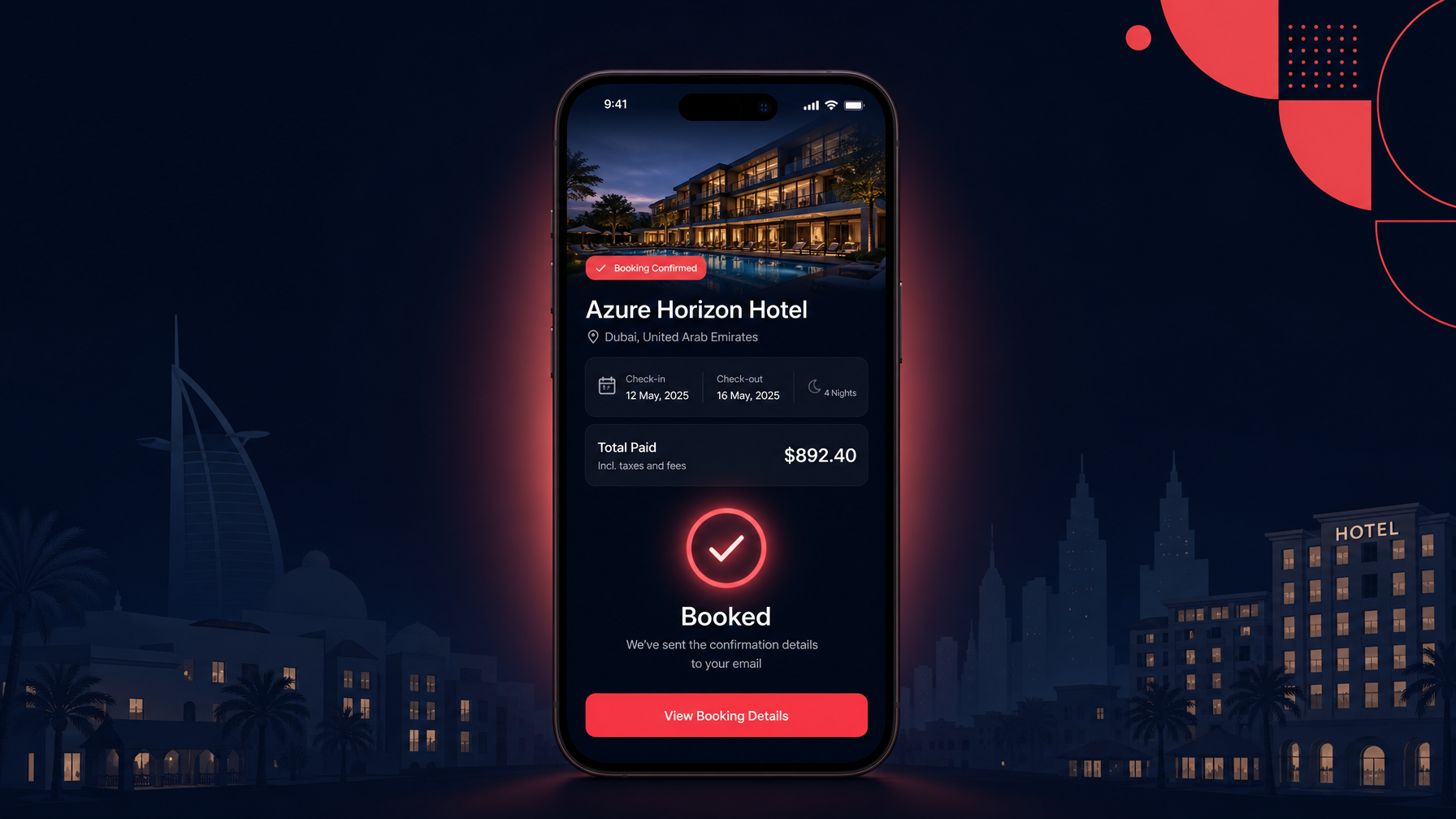
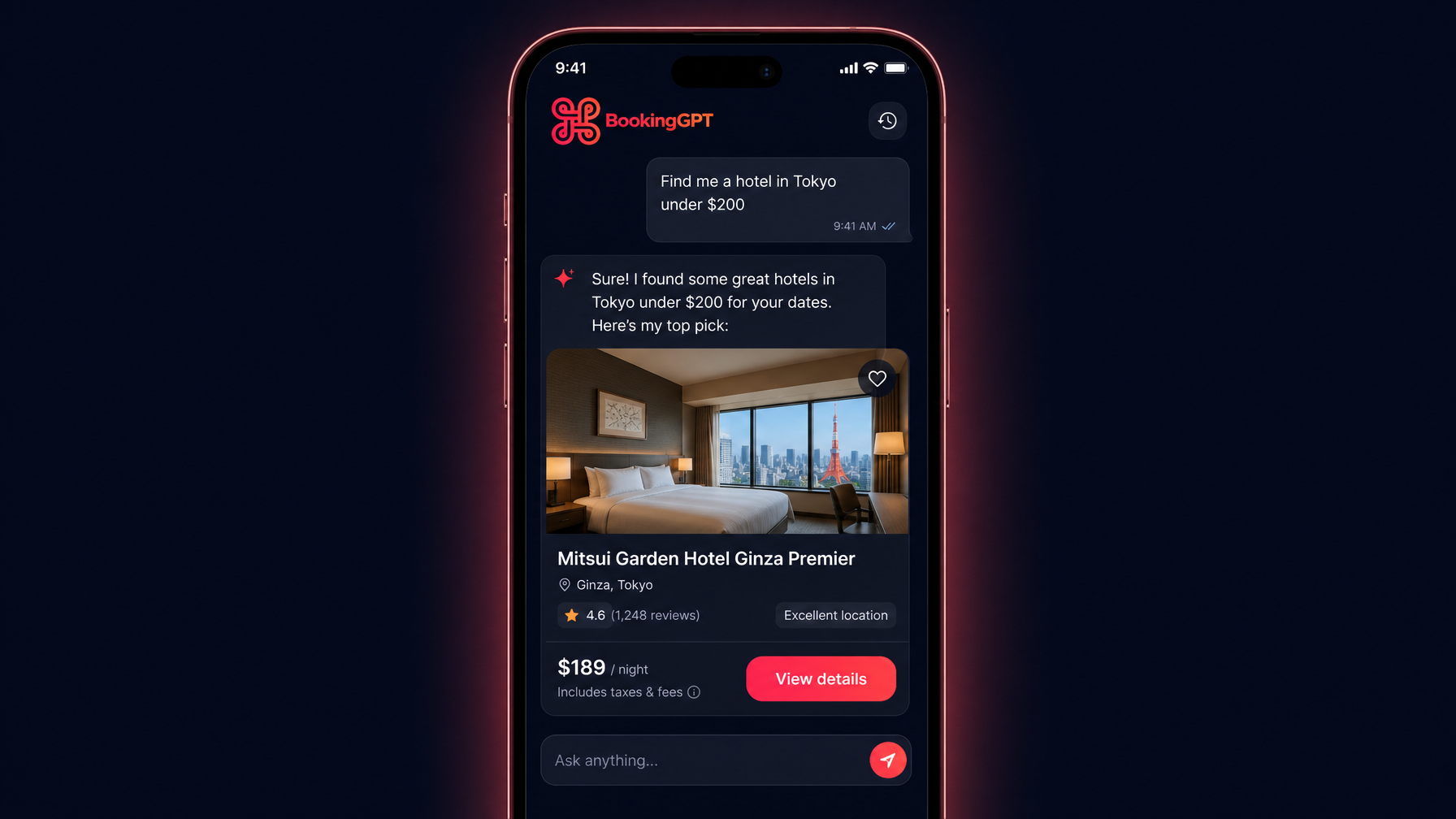
That's exactly what BookingGPT does. I typed a simple request — hotel near downtown Chicago, two nights, decent reviews, under $200 — and it came back with live availability and real prices, not cached results from three weeks ago. No switching tabs. No re-entering dates. The booking happened inside the app.
That's what a real AI travel app feels like.
How does an AI travel app find live hotel prices?
This is the part most apps gloss over in their marketing.
A good AI travel app connects to live hotel APIs — the same data feeds that power booking platforms. When you submit a request, the app queries real inventory in real time. What comes back is actual availability at actual prices, not estimates or historical averages.
The distinction matters because hotel prices change by the hour. A result from this morning might not be accurate by tonight. Apps that cache their data (to look faster or cheaper to run) will show you prices that no longer exist when you try to book.
Google's AI Search features for travel have moved in this direction — surfacing live booking options directly from search results. It's a signal that the standard is shifting. Travelers increasingly expect AI to handle the entire booking action, not just the research phase.
For an AI travel app to be genuinely useful, it needs:
- Live inventory access: Real availability, not cached data
- Price accuracy: What it shows is what you pay
- Booking execution: The transaction completes inside the app
Without all three, it's a travel inspiration tool wearing an AI label.
Is an AI travel app safe for hotel booking?
The short answer: yes, if you use a reputable one.
Safety concerns around AI travel apps fall into two categories: data privacy and booking reliability.
On data privacy, reputable AI travel apps use industry-standard encryption for any personal or payment information. Look for apps that are clear about their data policies — specifically whether they share or sell your travel preferences to third parties.
On booking reliability, the risk is using an app that shows you prices it can't actually honor. This typically happens with apps that scrape third-party data rather than connecting directly to hotel inventory. The fix is to look for apps with direct integrations — they pull from the source, so what you see is what you get.
BookingGPT works directly with live hotel availability data. The price you see when you search is the real price. There's no bait-and-switch between the AI result and the checkout screen.
What to look for in a good AI travel app
Not every app that says "AI" earns the label. Here's what actually separates a useful AI travel app from a glorified search bar:
1. It understands natural language requests
You type how you actually think: "something quiet near the beach, not a chain, for three nights." A real AI travel app parses that — quiet means away from nightlife, near the beach is a location filter, not a chain narrows the property type, three nights sets the date range.
2. It shows live availability
If the results aren't coming from a live API pull, the prices and availability are unreliable. Ask yourself: can I book directly from this result, or do I get sent somewhere else?
3. It completes the booking inside the app
The whole point of using an AI travel app is to remove friction. If the app hands you off to Booking.com or Expedia to complete the purchase, it hasn't saved you anything. The booking should happen without leaving the interface.
4. It works on mobile
You're often booking on the go — between meetings, at an airport, mid-trip. An AI travel app that only works well on desktop misses the point entirely.
5. It doesn't invent information
Some AI tools will confidently give you hotel details that are outdated or fabricated. A trustworthy AI travel app surfaces verified, live data. If it's uncertain, it tells you — it doesn't guess.
Why I switched from Booking.com to an AI travel app
Booking.com and Expedia built their reputations on massive inventory and reliable infrastructure. That's real. But the user experience has barely changed in a decade.
You still navigate filter panels. You still scroll through hundreds of properties. You still compare tabs. The "AI" features they've added are mostly recommendation engines dressed up with new branding — they suggest based on what other people booked, not on what you actually described.
The old way works. It's just slow, noisy, and built around the platform's interests, not yours.
The first time I used BookingGPT, I typed what I wanted the way I'd text a friend who knows hotels. The result came back fast, with real prices, and I booked in under two minutes. No filters. No tabs. No second-guessing whether the price would change at checkout.
That's not an incremental improvement on Booking.com. That's a different category of product entirely.
The bottom line
An AI travel app, at its best, removes the gap between what you want and a confirmed booking.
Most apps in this space are still in the suggestion business. They understand your request but hand off the execution. That leaves you doing the manual work the AI was supposed to replace.
BookingGPT is built around a different principle: AI that actually completes the booking. You describe what you need, it finds live availability at real prices, and the reservation happens without the old-school tab shuffle.
Ready to try an AI travel app that actually books?
Download BookingGPT on iOS and Android and book your next hotel in seconds.