TLDR
You can book hotels with AI right now, today, in seconds. Not browse, not compare, not add to a wishlist — actually book. I've been doing it with BookingGPT and the gap between this and opening Booking.com is almost embarrassing.
Table of Contents
- So, Can You Actually Book Hotels With AI?
- How Does AI Hotel Booking Actually Work?
- What's the Difference Between AI Booking and the Old Way?
- Is AI Hotel Booking Safe and Reliable?
- What Should You Type to Get the Best Results?
- Does AI Find Live Prices, or Is It Showing Old Data?
- What Happens If You Need to Cancel?
- Try It Yourself
So, Can You Actually Book Hotels With AI? {#can-you-book-hotels-with-ai}
Yes. And I mean that literally.
Not "AI helps you narrow down options." Not "AI gives you a summary of reviews." I mean: you type what you want, the AI finds real hotels with live availability and real prices, and you complete the booking. Done.
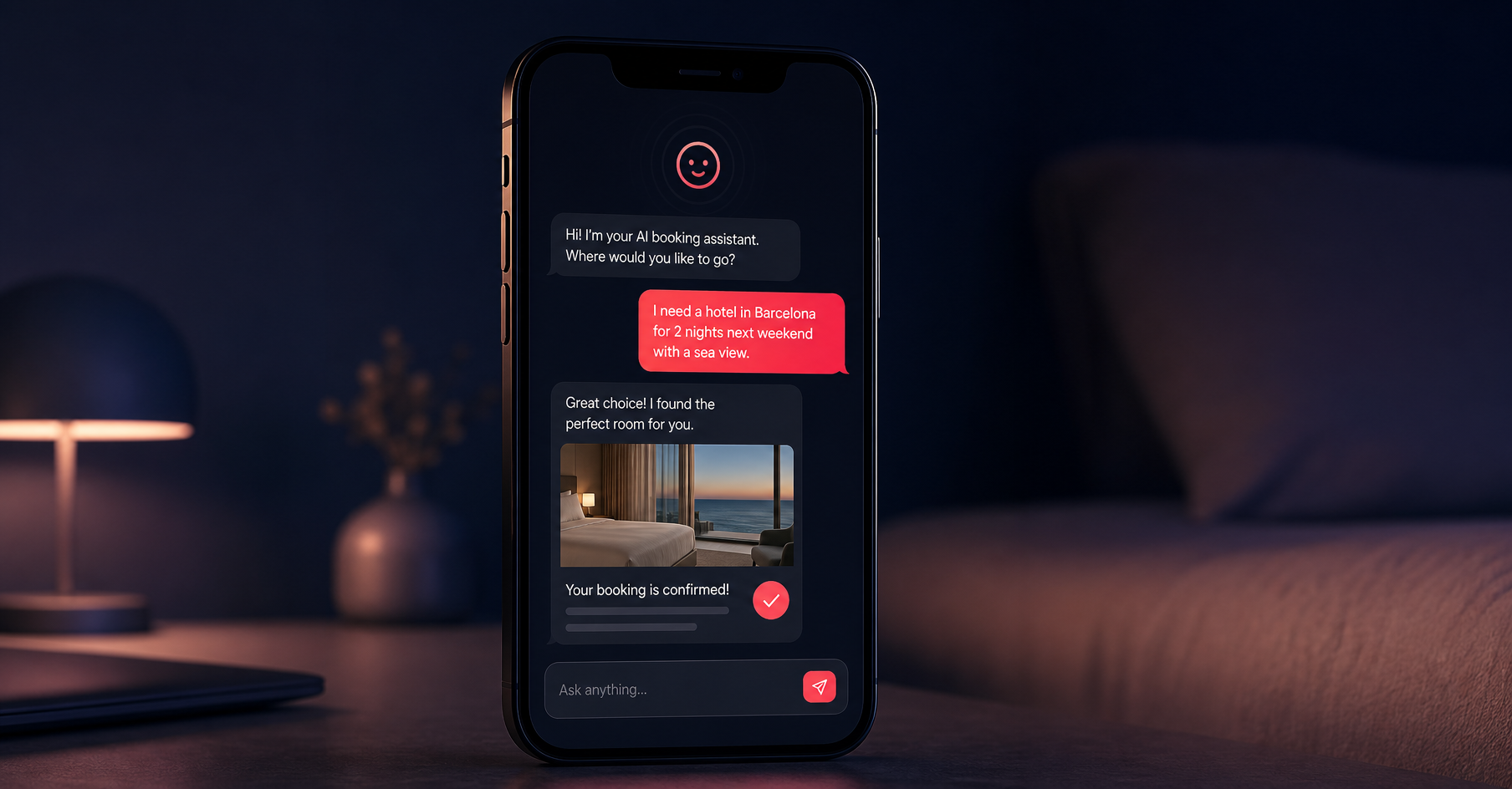
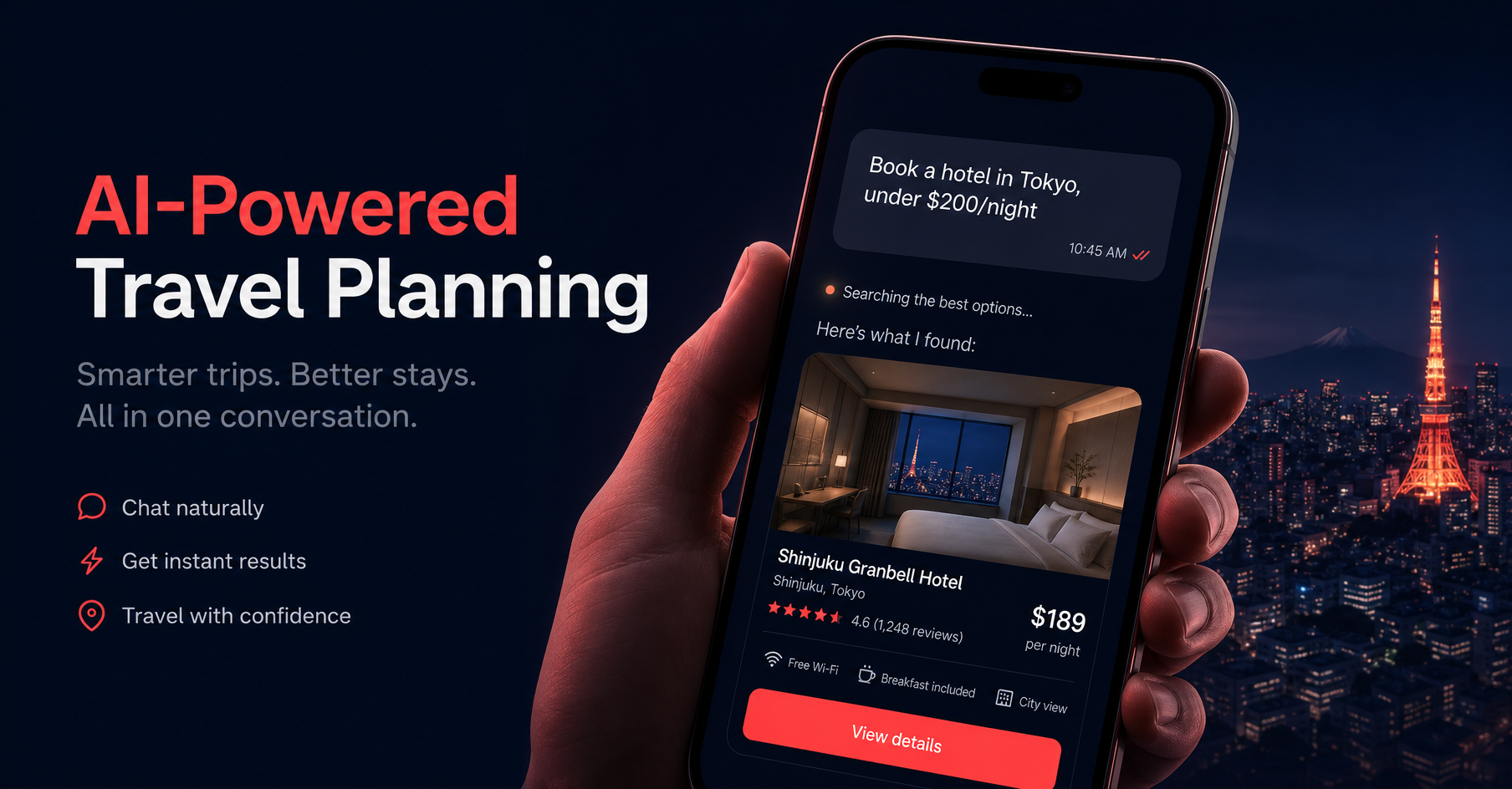
I typed "hotel in Lisbon, 4 stars, under $180 a night, check in Friday" into BookingGPT and had a confirmed booking in under two minutes. The whole process felt less like searching and more like texting a friend who happens to have perfect knowledge of every hotel on earth.
That's the shift happening right now in 2026. AI went from a research tool to an execution tool. It's not just answering questions anymore — it's completing tasks. And booking a hotel is one of the first real-world tasks it's genuinely nailed.
How Does AI Hotel Booking Actually Work? {#how-does-ai-hotel-booking-work}
Here's the simple version: instead of opening a site, clicking through filters, sorting by price, reading 40 reviews, second-guessing yourself, and eventually booking something that felt like a compromise — you just describe what you want.
The AI understands natural language. "Quiet hotel near the old town, something with a rooftop, not too touristy" is a totally valid input. It processes your request, queries live hotel availability, pulls real prices, and surfaces specific options that match.
With BookingGPT specifically, the AI connects to live booking data. That's the key part. It's not pulling from a cached database or showing you hotels that were available last Tuesday. It checks current availability and current rates, then lets you book directly inside the app.
The technical side involves what the industry calls "agentic AI" — AI that takes actions, not just generates text. IDC noted in their 2026 hospitality predictions that these agents "will not just search, but they will evaluate options and apply preferences to find the best value and most appropriate offering." BookingGPT is already operating at that level.
What's the Difference Between AI Booking and the Old Way? {#ai-vs-old-way}
The old way of doing things — Booking.com, Expedia — is a filter game. You land on a search page, you set a city, you slide the price bar, you click "breakfast included," you sort by rating, you click through 12 photos, you read the fine print, you get suspicious of the reviews, you go back, you try a different hotel. Forty-five minutes later you book something just to be done with it.
AI booking flips that entirely.
Old way:
- You adapt to the interface
- You run the search manually
- You interpret the results yourself
- You make all the decisions in isolation
AI way:
- The interface adapts to your words
- AI runs the search based on your actual intent
- AI filters and ranks results against your preferences
- You make one decision: yes or no
The friction goes from "this is a whole process" to "this took 90 seconds."
What's also worth noting: Expedia's own research found that only 8% of travelers currently trust AI to handle the booking step. (Skift, April 2026) That number is going to climb fast as apps like BookingGPT show people what it actually feels like. The hesitation isn't about the technology — it's about not having tried it yet.
Is AI Hotel Booking Safe and Reliable? {#is-ai-hotel-booking-safe}
Fair question. The concern most people have is: is this AI showing me real, current information, or is it hallucinating a hotel that closed in 2023?
That concern applies to general-purpose AI tools like ChatGPT, where you're asking a language model that was trained on historical data. It can tell you about a hotel, but it can't check if there's a room available tonight.
BookingGPT is different because it's purpose-built for this. It connects to live availability data. The prices it shows are the prices you'll pay. The rooms it shows are the rooms that exist, right now, for your dates.
The short answer: use a purpose-built AI booking app, not a general chatbot, and you get real data. That distinction matters.
What Should You Type to Get the Best Results? {#what-to-type}
The beauty of natural language is you don't need to be precise. But a bit of context helps the AI match you faster. Here's what works well:
Be specific about location: "near the Eiffel Tower" beats "Paris." "Midtown Manhattan" beats "New York."
Mention your must-haves: "pet friendly," "gym," "free parking," "breakfast included" — say what matters.
Give a budget: "under $150 a night" or "I don't mind spending $300 if the place is great" both work.
Add vibe if it helps: "something boutique and quiet" or "a big hotel with a pool" gives the AI useful signal.
A real example: I typed "oceanfront hotel in Miami, not a party scene, 3 or 4 stars, around $200" into BookingGPT. It found exactly that. No filter adjustments, no second search. First try.
Does AI Find Live Prices, or Is It Showing Old Data? {#does-ai-find-live-prices}
This is the question that separates good AI booking apps from bad ones.
General AI assistants — ChatGPT, Claude, Google's Gemini — pull from training data. As one travel expert noted at NerdWallet, travelers should "take it with a grain of salt" when using general AI for travel because the model may have been trained on data that's months or years old. (Fox34/InvestigateTV, April 2026) A hotel from that training data might be closed, fully booked, or three times the price it used to be.
BookingGPT queries live data. It's built specifically to pull current availability and current pricing — the same kind of data a traditional OTA would show you, but surfaced through a conversation instead of a filter menu.
So the answer is: it depends entirely on which tool you use. With BookingGPT, you're seeing live prices for real rooms.
What Happens If You Need to Cancel? {#what-if-you-need-to-cancel}
Cancellation policies are set by the hotels themselves, not by the booking app. Whether you book through Booking.com, Expedia, or BookingGPT, the cancellation terms are attached to the specific rate you chose.
When you book with AI, the same rate details apply. Free cancellation rates show up labeled as such. Non-refundable rates are cheaper for a reason. The AI surfaces this information as part of the booking flow — you're not agreeing to anything blind.
The practical tip: if flexibility matters, filter for free cancellation when you're typing your request. "Hotel in Barcelona, free cancellation, under $200" works perfectly and the AI will prioritize those results.
Try It Yourself {#try-it-yourself}
If you've been doing the Booking.com / Expedia dance for years, I get it — it's familiar. But familiar isn't the same as good.
The first time you type a normal sentence and watch AI pull up the perfect hotel in seconds, something clicks. It's not a gimmick. It's just a better way to book.
Download BookingGPT and try it on your next trip:
Type what you want. Get a real hotel. Book in seconds.
That's what it looks like to book hotels with AI in 2026.