Description
I tested every app calling itself the best AI hotel booking app in 2026. Most help you search faster. Only one type actually books. Here's how I filter for apps that complete the reservation with live availability and real prices.
I Tried Every AI Hotel Booking App That Claims to Be the Best. Here's What Actually Booked.
#TLDR: The best AI hotel booking app in 2026 should do more than find options. I typed plain English requests across a bunch of AI-powered apps: most gave me smarter lists, then handed me off to Booking.com or Expedia to finish. The ones that actually count check live availability, show real prices, and complete the booking inside the same app. No tab switch, no second checkout.
Table of Contents
- What does best AI hotel booking app actually mean in 2026?
- Why do most AI travel apps stop at search?
- What should the best AI hotel booking app do that others don't?
- How do big platforms use AI for hotels right now?
- How I test if an AI app really books?
- What does real AI hotel booking feel like?
- Is AI hotel booking actually faster than the old way?
- Download BookingGPT
What does best AI hotel booking app actually mean in 2026?
Search that phrase today and you get two completely different products with the same label.
Type 1: AI-powered discovery. You describe what you want. "quiet boutique in Lisbon, under €180, walkable to Alfama". And it surfaces options with summaries, review highlights, price comparisons. That is useful. That is also where most apps stop.
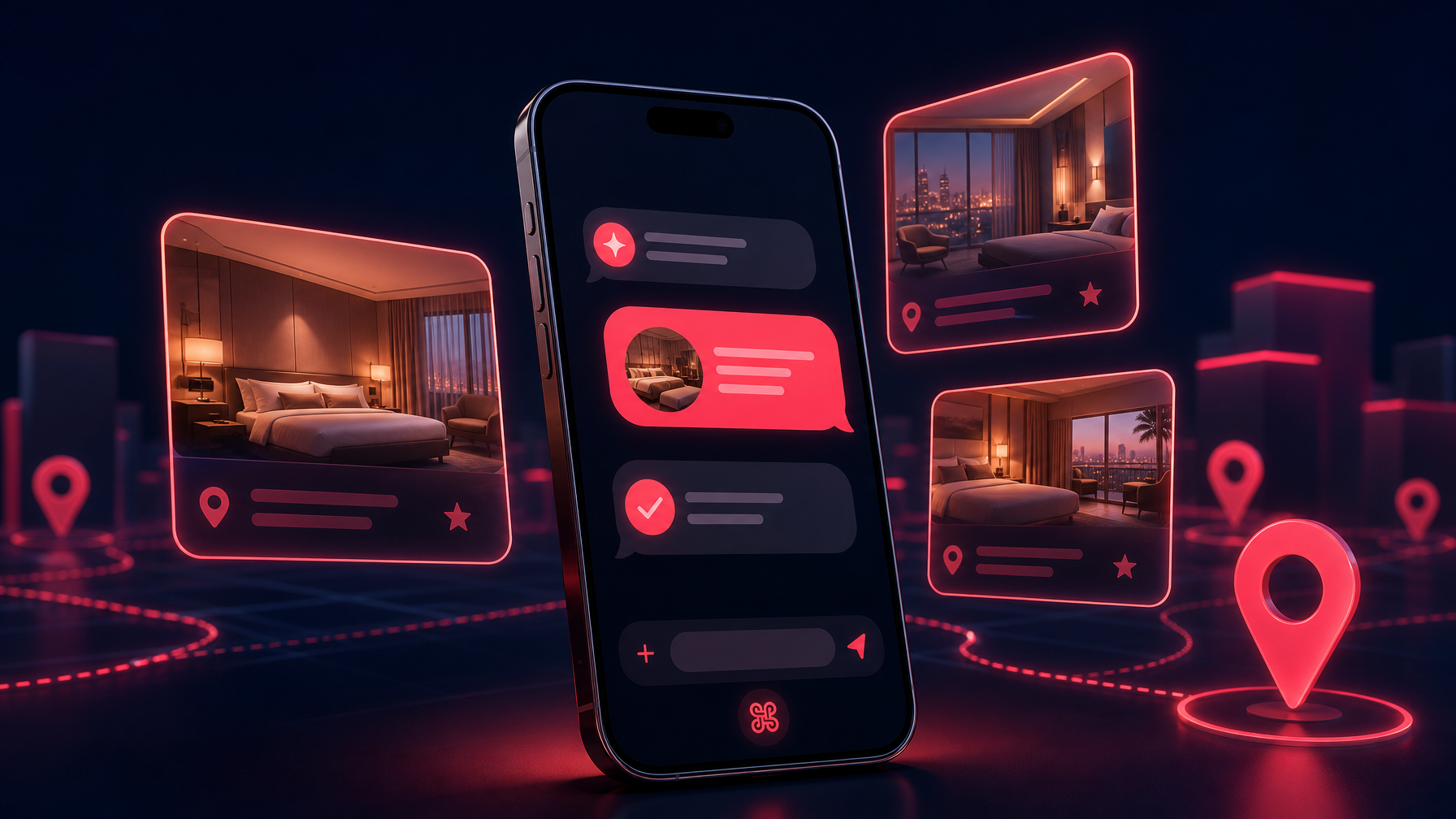
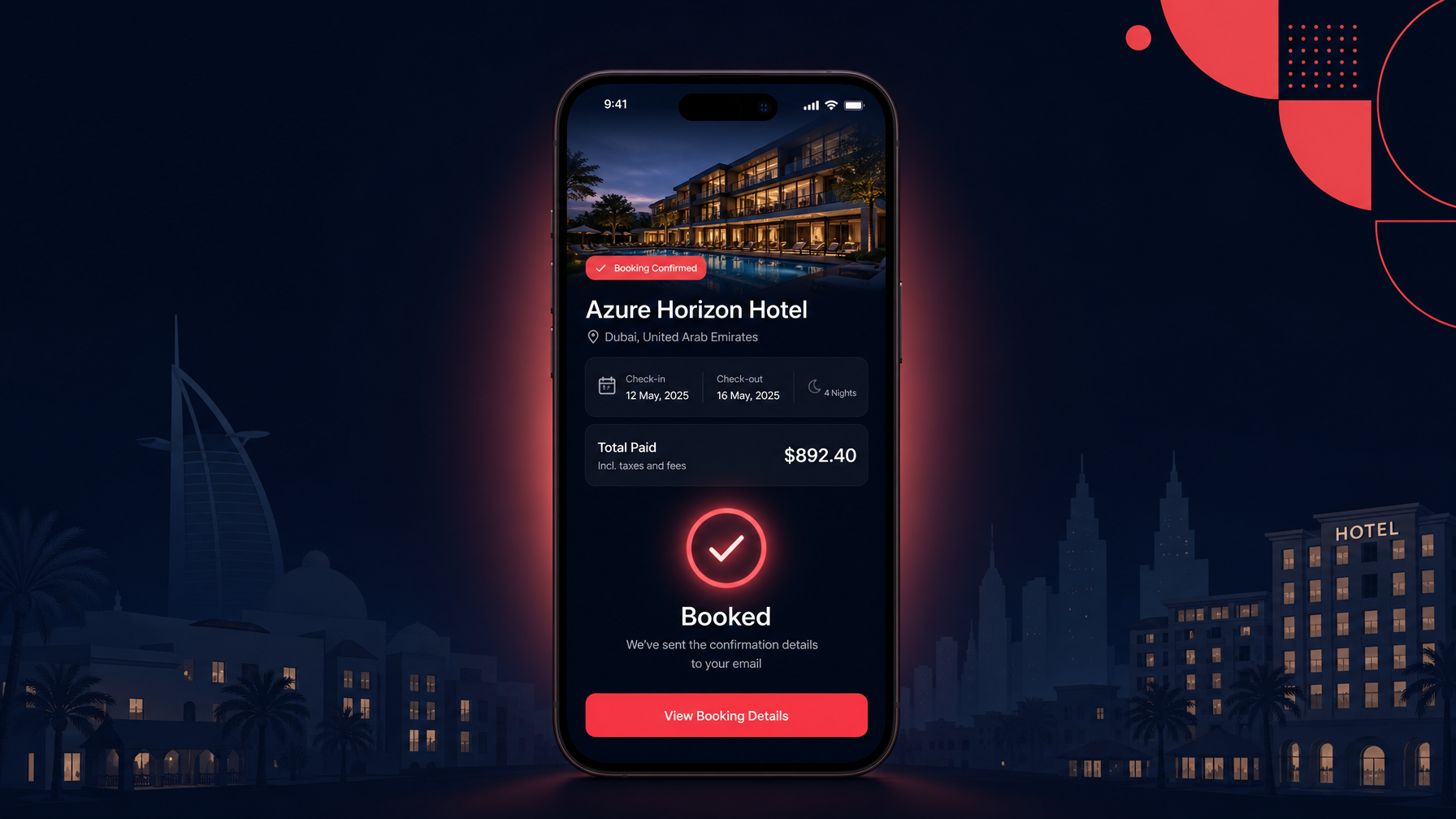
Type 2: AI-powered booking. You describe what you want, the app checks live availability and real prices across 32,000+ cities, and completes the reservation in-app. You get a confirmation email. No handoff.
Most apps marketing themselves as the best AI hotel booking app live in Type 1. Airbnb's 2026 Summer Release adds AI for review synthesis, comparison, and support. But the transaction still runs through Airbnb's checkout. IHG's ChatGPT app and conversational search and Uber's hotel expansion show the same pattern across big brands: AI makes finding easier, booking still happens in the old flow.
The distinction matters because "helped me decide" and "booked it for me" are not the same job.
Why do most AI travel apps stop at search?
Two reasons.
First: availability is hard. Real-time hotel availability means connecting to actual inventory, with prices that change by the minute. A lot of AI apps avoid that complexity. They generate lists or summarize reviews. Which look smart. But never hit live inventory. AFAR's hands-on test of AI travel apps notes how many tools still require manual price checks and separate bookings even after the AI "finds" the hotel.
Second: monetization. Many apps are aggregators. Frommer's testing of booking sites points out that aggregators find quotes then pass you to an OTA or hotel site to finish. The AI layer speeds up the front door. The house is still Booking.com and Expedia. The old way of doing things I used for years.
That is why the hand-off moment tells you everything. If you click "Book on…" and leave the app, you are using a search tool with AI branding.
What should the best AI hotel booking app do that others don't?
I use a 4-point filter now before I keep any app on my phone:
-
Live availability, not cached lists. It checks what is actually open for my dates. Not what was open last week.
-
Real prices inside the chat. No "starting at" or estimates that jump at checkout.
-
In-app booking with confirmation. I should not re-enter card details on a third-party site. The test is simple: do I get a real booking email without leaving?
-
Natural language that preserves constraints. If I say "under $150, no resort fees surprise, late check-in," it should honor that across results.
BookingGPT lists live inventory across 32,000+ cities on its App Store page with real prices and real checkout. That description is what made me download it. Because that is exactly the bar.
How do big platforms use AI for hotels right now?
Airbnb: 2026 Summer Release brings hotels to Airbnb with AI for review highlights and comparisons. Helpful for deciding. Booking stays in Airbnb.
IHG: Conversational search and ChatGPT app lets you describe what you want in your own words. Discovery improves. Then you book through IHG.
Uber: Hotel bookings and new travel features and ABC News coverage position travel booking in one super-app flow. Useful if you already live in Uber. Still the aggregator-to-OTA pattern for the hotel part.
Google: AI Mode for travel builds out agentic help with OTA partners. Big improvement for comparing. But note Google frames agentic booking as rolling out with partners. Not fully autonomous in-app confirmation today.
All of these make the old way faster. None redefined what "best AI hotel booking app" should mean to me: type a request, get confirmation.
How I test if an AI app really books?
My 30-second test:
I type: "Boutique hotel in Lisbon near Alfama, under €180, Friday check-in, free cancel."
Then I watch for the hand-off.
- Does it show live availability with dates I set?
- Does price stay consistent from list to checkout?
- Is there a "Book on Booking.com / Expedia" button? If yes, it is discovery.
- Does it stay in-app and give me a confirmation number?
With BookingGPT, I typed that exact sentence in Lisbon. Got live options in seconds, picked one, confirmed, got the email. No new tab. That is the difference between AI that finds and AI that books.
What does real AI hotel booking feel like?
It feels boring in the best way.
No comparison spreadsheets. No 12 tabs. No copying dates between Booking.com and Expedia to see which one dropped the cleaning fee or added breakfast.
I type like I text a friend: "Need a hotel in Austin near downtown, quiet floor, under $200, check in Thursday."
Seconds later: real options, real prices, map with pins. I tap one. Done.
The old way: filters, sort, scroll, read 40 reviews that say the same thing, check dates, lose the rate, start over. The new way: one sentence → confirmation.
Is AI hotel booking actually faster than the old way?
Yes. Because it removes steps, not just words.
Old way on Booking.com or Expedia: open app, enter destination, dates, guest count, set filters, scroll, open 4-5 hotels in tabs, compare prices that differ by OTA, check cancellation, re-enter details, confirm.
AI booking way: type the whole constraint set at once. Location, vibe, budget, must-haves. And let the AI pull live availability that respects all of it. Then confirm in the same place.
HotelTechReport's overview of AI in hospitality notes AI systems improve as they ingest more data. For booking, that shows up as better matching to natural language requests over time, not just faster search bars. The time win compounds because you stop repeating the same filter work every trip.
Download BookingGPT
If you want to see what the best AI hotel booking app actually feels like when it books. Not just recommends:
I type: "Hotel in [city], [what I care about], under [budget], [dates]." I get live options with real prices. I tap. I get a confirmation email. No hand-off to Booking.com. No Expedia detour.
Download BookingGPT. Smart booking, human stays.
iOS: BookingGPT on App Store
Web: bookinggpt.app/explore
Try one sentence for your next stay. If it does not end with a confirmation in the same app, it is not the best AI hotel booking app. It is just a better search bar.