Description
A first-person guide to booking hotels with AI in 2026 — how it actually works, why it beats the old way, and the app that does the booking for you in seconds.
I Typed What I Wanted and AI Booked My Hotel in Seconds. Here's Exactly How It Works
#TLDR
- AI can now actually book a hotel for you — not just suggest one
- The process: type what you want, AI finds live availability and real prices, you confirm, it books
- It's significantly faster than tabbing through Booking.com or Expedia
- Apps purpose-built for hotel booking (not general AI chatbots) give you the most reliable results
- BookingGPT is built specifically for this — download it here
Table of Contents
- Can AI actually book a hotel for you — not just suggest one?
- How does booking a hotel with AI work, step by step?
- Does AI booking use live prices and real availability?
- How is booking with AI different from using Booking.com or Expedia?
- How fast can AI book a hotel?
- Is it safe to book hotels with AI?
- What do I actually need to book a hotel with AI?
I was in a cab to the airport, flight leaving in three hours, zero hotel sorted on the other end.
I typed: "4-star hotel in central Lisbon, two nights, check-in tomorrow, under $200."
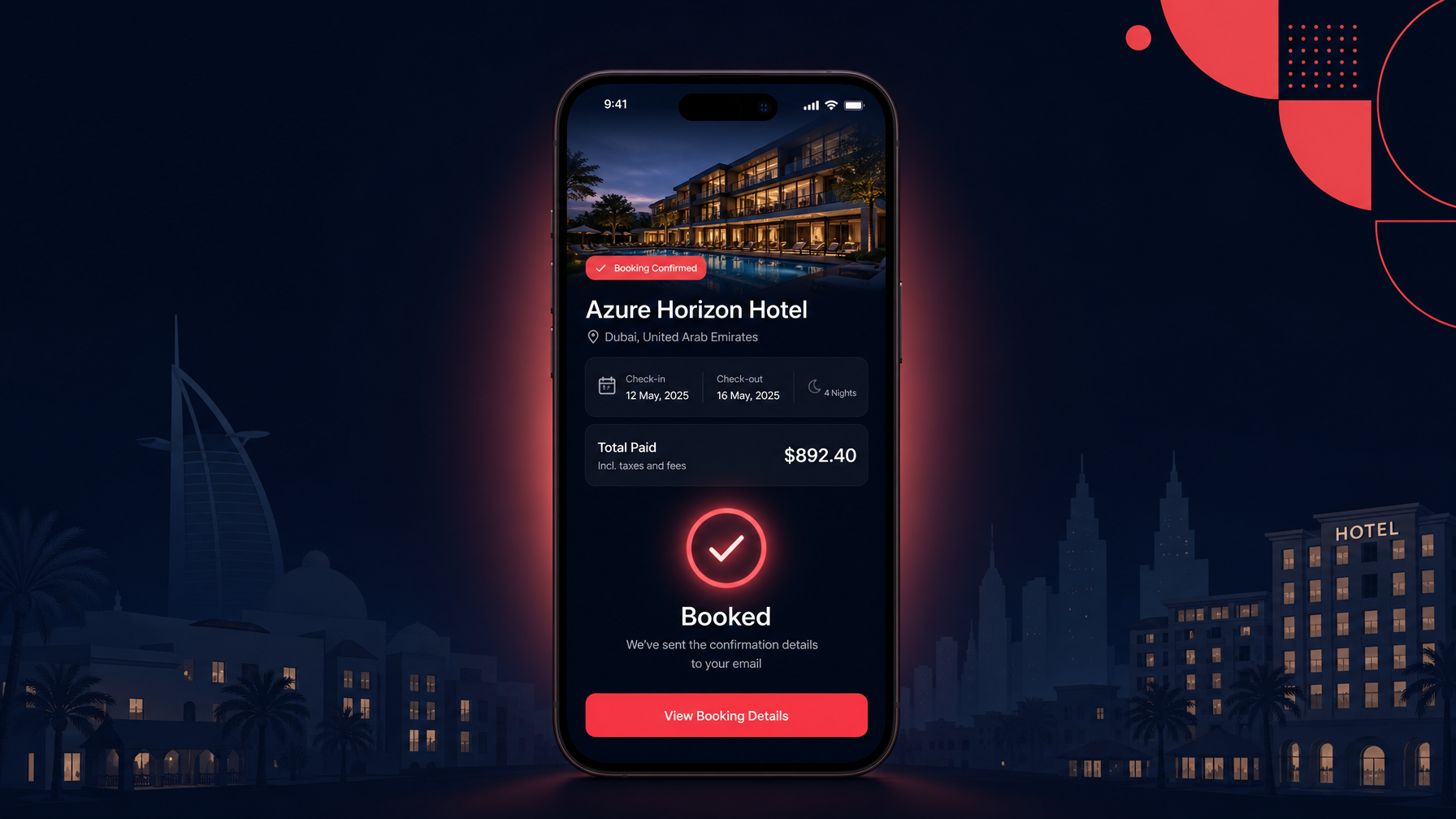
Fourteen seconds later, I had a confirmed reservation.
Not a list of suggestions. Not a mood board. A booking.
That moment flipped a switch for me. I'd used Booking.com and Expedia for years — they're fine, they work, but they also demand a lot of you. Tabs, filters, price comparisons, sign-ins, checkout flows. You do all the legwork; the platform just holds the inventory.
There's a different way now. Here's everything you need to know about booking hotels with AI in 2026.
Can AI Actually Book a Hotel for You — Not Just Suggest One? {#can-ai-actually-book}
Yes. And the distinction matters more than people realize.
Most general AI tools (ChatGPT, Gemini, Claude) can talk about hotels. They'll give you a list of properties that match your vibe, explain neighborhoods, compare star ratings. But at the end of that conversation, you still have to go somewhere else and book.
That's a fundamentally different thing from what AI booking apps do.
Apps purpose-built to book hotels with AI connect directly to live inventory systems. They don't pull from training data that was frozen in 2024. They access real-time availability — the same feeds that power the actual booking engines — and execute the reservation for you. One input, one confirmation.
OpenAI's Operator agent can browse and book on the open web. But it's a general-purpose agent navigating existing booking sites — it wasn't built for hotel search specifically. A dedicated AI booking app gives you a tighter, faster, more purpose-built experience.
The short answer: yes, AI books hotels. But make sure you're using a tool that actually connects to live inventory, not one that just gives you a list and hands you off.
How Does Booking a Hotel With AI Work, Step by Step? {#how-it-works}
The experience varies slightly between apps, but purpose-built AI hotel booking follows roughly this flow:
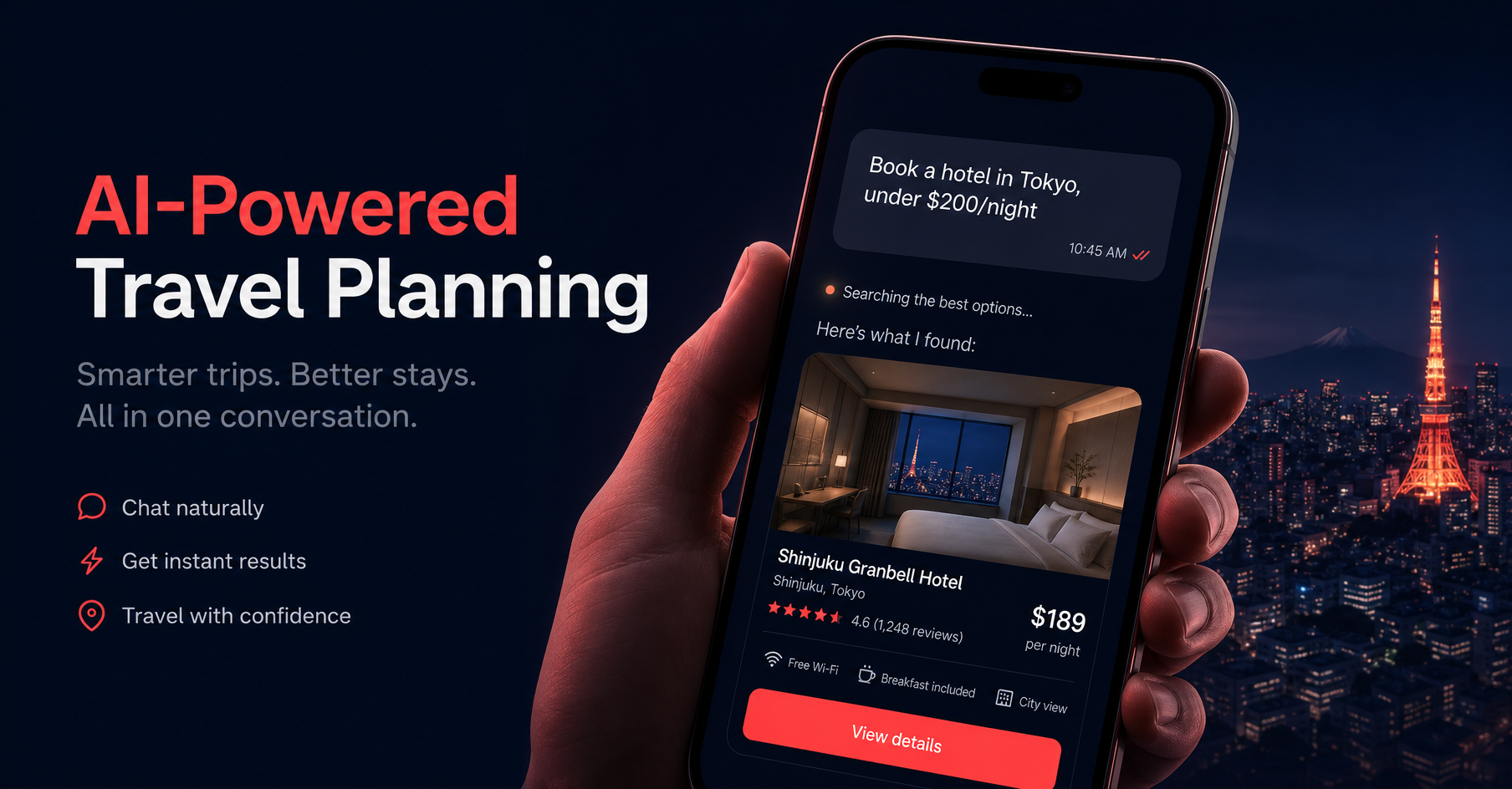
1. You describe what you want in plain language.
No dropdowns. No date pickers. No filter menus. You type (or speak) something like: "oceanfront hotel in Barcelona, king bed, under $180, check-in Friday."
2. The AI parses your request.
It pulls destination, dates, budget, and preferences from your natural language — no form-filling required.
3. It searches live inventory.
This is the critical step. The AI queries real availability data, not cached suggestions. What comes back reflects actual open rooms at that moment.
4. You see real options with real prices.
A short list of matches, ranked by fit. You're not drowning in 400 results — the AI has already filtered the noise.
5. You confirm. It books.
One tap. Payment processes, confirmation goes to your email. Done.
The whole sequence takes seconds for a straightforward request. According to xequenceai.com, users can complete a booking through an AI assistant significantly faster than through traditional OTA checkout flows, which typically involve six or more screens before confirmation.
Does AI Booking Use Live Prices and Real Availability? {#live-prices}
This is the most important thing to verify before trusting any AI booking tool.
Some AI tools — especially general chatbots — do not use live data. They may surface hotels based on training data, which can be months old. Prices are wrong. Availability is wrong. The hotel might even be closed. Travel expert Sally French of NerdWallet put it plainly: "AI models might be using data trained in 2024. Things can change."
Purpose-built AI hotel booking apps are wired differently. They pull directly from live availability and rate feeds — the same real-time inventory that traditional OTAs use. So when the AI shows you a price, that price is live. When it shows a room as available, it's actually available.
The key question to ask about any AI booking tool: does it pull live inventory, or does it reference cached/trained data? If it's the former, you're good. If it's the latter, treat it as inspiration, not a booking engine.
How Is Booking With AI Different From Using Booking.com or Expedia? {#ai-vs-old-way}
Booking.com and Expedia are useful tools. They hold enormous inventory and they've served travelers well for two decades. But they were built around a search-and-scroll model that puts the work on you.
Here's what the old way looks like: you set dates, pick a location, choose filters, scroll through 200 listings sorted by sponsored placement, click into individual properties, compare tabs, go through a multi-step checkout, and create or log into an account.
The AI way: one sentence. Done.
The structural difference is who does the work. Traditional OTAs surface options and let you wade through them. AI booking apps understand your request, filter automatically, and act on your behalf.
TakeUp AI's 2026 research found that 78% of travelers have already booked a stay based primarily on AI recommendations, and 94% trust AI recommendations as much as or more than other sources. The shift is real and it's happening fast.
That doesn't mean Booking.com or Expedia are irrelevant — they're massive inventory platforms and both are integrating AI features of their own. But the experience of using them still requires significantly more manual effort than a purpose-built AI booking app.
How Fast Can AI Book a Hotel? {#how-fast}
Fast enough to handle the airport cab scenario I described at the top of this article.
Most purpose-built AI booking apps complete a search and present confirmed options in under 30 seconds for a standard request. The confirmation itself processes in seconds once you tap approve.
Contrast that with the average traditional booking flow: research from wave-access.com notes that human agents handling routine hotel bookings face response time delays and accuracy issues, particularly during peak hours — problems that an AI system eliminates by design.
Speed matters most in three situations:
- Last-minute bookings — you need a room tonight
- Back-to-back trips — no time to research
- Simple, clear requests — you know what you want and just need it handled
For all three, booking with AI is the fastest path from intention to confirmation.
Is It Safe to Book Hotels With AI? {#is-it-safe}
Yes — with the same caveat that applies to any booking: use a reputable app, not just any AI chatbot.
The safety questions people ask most:
Will I actually get what I booked?
If the AI is connected to a verified booking system, yes. Your confirmation comes from the same backend infrastructure as a traditional OTA booking. The hotel gets the reservation. You get the confirmation number.
Is my payment data secure?
Legitimate AI booking apps use standard payment security protocols (PCI-DSS compliance, encrypted checkout). This is the same bar any serious booking platform meets.
What if there's a problem?
This is worth checking per app. Some AI booking tools have customer support; others don't yet. Know before you travel.
What about AI "hallucinations"?
This is a real concern with general chatbots — they can confidently describe hotels that don't exist or are no longer open. CNBC reported in March 2026 that hallucinations remain a persistent worry even as adoption grows. Purpose-built booking apps address this by pulling from live data feeds instead of generating responses from training data. The difference is fundamental.
Bottom line: AI hotel booking is safe when the tool you're using is built for it — grounded in live inventory, not generated text.
What Do I Actually Need to Book a Hotel With AI? {#what-you-need}
A lot less than you'd expect.
You need:
- A destination (city, neighborhood, or "near X")
- Check-in and check-out dates
- A payment method
- Whatever preferences matter to you (budget, amenities, bed type)
You don't need:
- An account with a dozen OTAs
- 45 minutes to compare options
- A tab graveyard of half-finished searches
The AI handles the research, filtering, and execution. Your only job is to know roughly what you want.
Even vague inputs work well. "Somewhere nice in Rome under $200" is a valid starting point. The AI asks a clarifying question or two if it needs more detail — but most of the time, it just books.
The App I Use to Book Hotels With AI
I use BookingGPT.
It's built for exactly this: type what you want, AI finds live availability with real prices, and the booking happens in seconds. No tab-switching. No filter rabbit holes. No old-school OTA checkout flow.
I typed "4-star hotel in central Lisbon, two nights, under $200" and had a confirmed reservation in 14 seconds. That's not an exaggeration — that's just what purpose-built AI hotel booking looks like when it works.
If you've been doing it the old way — and let's be honest, Booking.com and Expedia are the old way — BookingGPT is worth trying.
Download BookingGPT here and book your next hotel in seconds.
Smart booking, human stays.