Description
In 2026, Marriott, IHG, and Hilton all launched AI hotel search tools — but there's a catch every traveler should know. Here's what "book hotels with AI" actually means now, and which app does it end-to-end.
I Watched Every Major Hotel Chain Launch "AI Booking" This Summer. They All Have the Same Problem.
#TLDR: Marriott, IHG, Wyndham, and Hilton all debuted AI hotel search tools in 2026. Every single one hands you off to a traditional booking page the moment you actually want to reserve a room. BookingGPT is the one app that skips the handoff and books for you directly.
Table of Contents
- The AI hotel booking arms race just hit the big chains
- What does "book hotels with AI" actually mean?
- Can their AI tools actually complete a booking?
- Is AI hotel booking safe?
- Does AI get you better prices?
- How I actually book hotels with AI right now
- The bottom line
The AI hotel booking arms race just hit the big chains
Something shifted this summer.
In June alone, Marriott launched Ask Bonvoy — a conversational AI search tool across its 10,000-property portfolio. IHG put a ChatGPT app live that lets you explore its 7,000 hotels by talking to it. Wyndham launched its own native ChatGPT app. Hilton rolled out a generative AI concierge back in March.
Four of the world's biggest hotel companies, all racing to add AI in the span of a few months. That's not a coincidence.
The numbers explain the urgency. According to Phocuswright's The AI Surge: Travel's Fastest Behavioral Shift in a Decade, more than half of U.S. travelers now use AI when figuring out where to stay. A March 2026 analysis from BCG and NYU SPS put the number at 37% already using AI embedded in booking sites to actually book. Hotel discovery is shifting from "search and scroll" to "ask and book" — and the industry knows it.
So every major chain scrambled to add a conversational layer. I get it. The problem is what happens when you actually want to confirm a room.
What does "book hotels with AI" actually mean?
It depends on who you ask — and the answer has changed a lot in 2026.
The original version of "AI" in travel was a chatbot that answered FAQs or helped you filter a search. Not far off from typing keywords into a search bar with extra steps.
The newer version is conversational discovery: you tell an AI what you want in plain English ("something near the waterfront, under $180, good breakfast"), and it surfaces results that match your actual intent rather than just your typed keywords. That's genuinely useful. It's what Marriott's Ask Bonvoy and IHG's ChatGPT app do well.
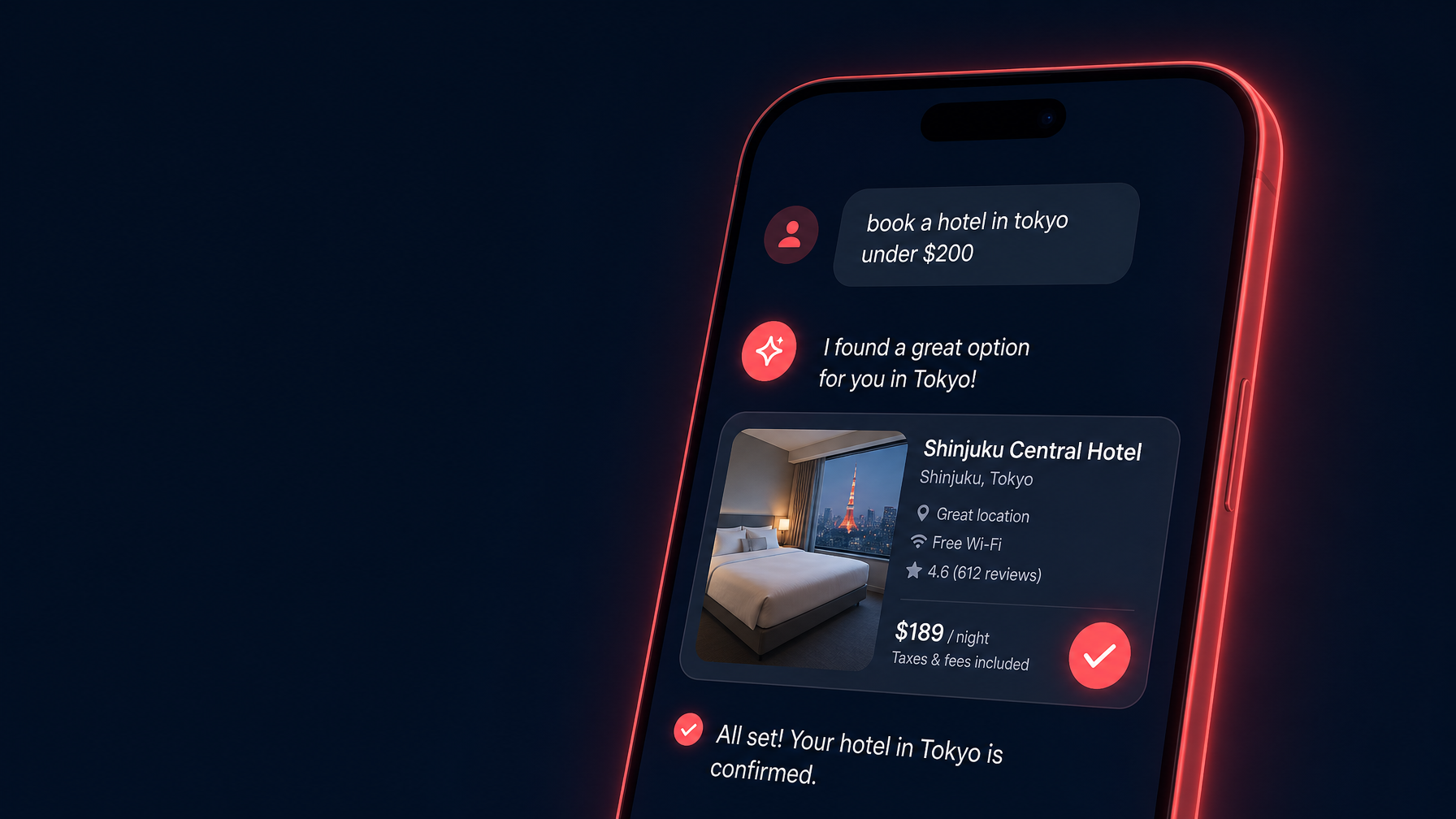
The complete version — what "book hotels with AI" should mean — is when the AI handles the whole thing. You describe what you want, it finds live availability at real prices, and it confirms the reservation. No tab-switching, no filling out forms, no re-entering your details on a checkout page.
That last version is rarer than the marketing suggests. Which brings me to the catch.
Can their AI tools actually complete a booking?
Here's the part the press releases bury.
Marriott's Ask Bonvoy: the AI surfaces results, then "seamlessly hands off to Marriott's existing booking capabilities to complete reservations," per the official announcement. Translation: you end up on the same checkout page you always did.
IHG's ChatGPT app: "once a hotel is selected, users are guided to IHG's direct booking channels to complete their reservation," per IHG's own press release. Same story.
These tools handle the discovery part beautifully. The AI conversation drops you at the door of the booking funnel and then waves goodbye. You still fill out your dates, your payment info, your contact details — all the friction that made hotel booking annoying in the first place.
The handoff is the gap. And it's a real one.
When I want to book hotels with AI, I want the AI to actually book. Not hand me a shortlist and point me at Expedia's checkout page.
Is AI hotel booking safe?
The safety question comes up a lot, and it's a fair one.
The short answer: yes, when you're using a reputable app that processes payment through established, secure channels. The concern with AI booking isn't security — it's accuracy. Will the AI confirm the right dates? Will it book the room type you actually asked for?
That depends entirely on how the AI is built. The more the AI relies on live inventory data (rather than static cached results), the more accurate the booking. Apps that pull real-time availability from verified sources and confirm the reservation before charging you are structurally no different from booking through any major OTA. The risk isn't higher — if anything, removing the manual data-entry step removes a common source of human error.
The bigger risk most people overlook: booking through a tool that says it can book but actually scrapes prices from third-party sites without confirming real-time availability. That's where you get the "room isn't actually available" problem. The answer is to use an app that confirms live inventory at the moment of booking.
Does AI get you better prices?
Not automatically — but it removes the behaviors that lead to worse prices.
On Booking.com or Expedia, most people scroll the first page of results sorted by "recommended" (which is largely determined by which hotels paid for placement), pick something that looks fine, and book it. That's not optimized. That's convenient.
When you book hotels with AI by describing what you actually want, you get results filtered by your real criteria rather than someone's ad budget. "Boutique hotel, walkable to the old town, under $150, good reviews for cleanliness" returns a different — and usually better — set of options than whatever the algorithm decided to surface first.
The BCG/NYU SPS report notes that OTA commissions run 15-30% of room revenue, costs that hotels typically bake into their rates. As AI booking becomes more direct, that commission layer is one of the structural inefficiencies on the table. It's early, but the direction is clear: more direct, more accurate, less friction.
How I actually book hotels with AI right now
I stopped scrolling through Booking.com and Expedia a while ago. Not because I have anything against them — they work. But they were built for a world where the only way to find a hotel was to search, scroll, compare tabs, and decide. That world is over.
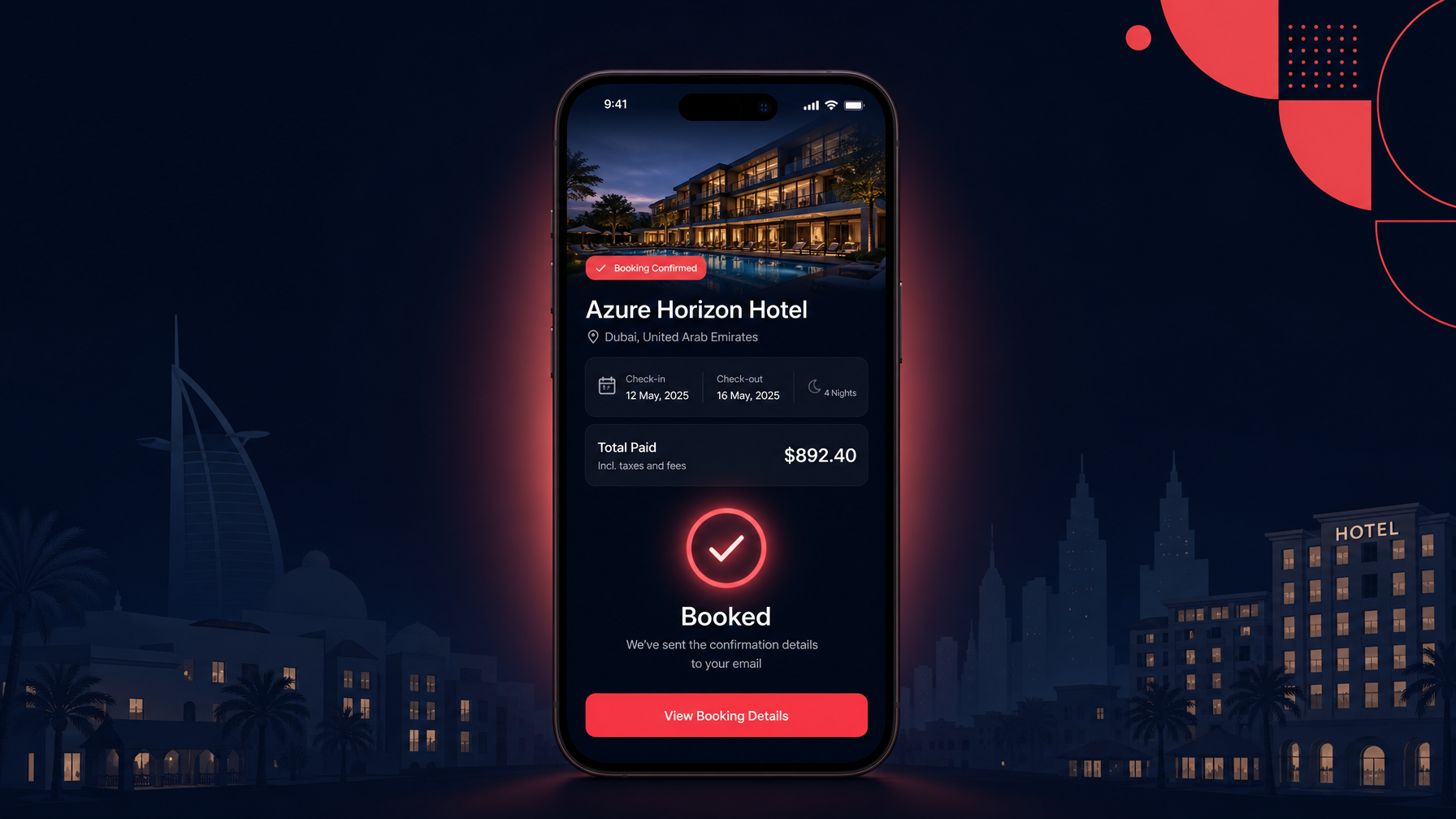
What I do now: I open BookingGPT, type what I want in plain English, and it finds live availability with real prices. I confirm. Done. No handoff, no checkout redirect, no re-entering my card number for the fifth time this year.
The thing that made me switch wasn't a feature comparison. It was the first time I typed "hotel in Lisbon, quiet neighborhood, under $130, available next Thursday" and got a confirmed booking in under a minute. The old way suddenly felt broken.
BookingGPT is available on iOS and Android. It doesn't generate suggestions or point you at a booking page. It books — which is the part the big hotel chains are still figuring out how to do end-to-end.
The bottom line
The major hotel chains launching AI search tools in 2026 is a good sign. It confirms that conversational hotel booking is where the industry is heading, not a niche experiment.
But most of what launched this summer is still AI-assisted discovery, not AI booking. The conversational part works. The completing-the-reservation part still drops you into the same old flow.
If you want to book hotels with AI — actually book, not just search — the technology exists right now. You don't need to wait for Marriott to finish rolling out Ask Bonvoy globally.
Download BookingGPT on iOS or Android and try it on your next trip. Type what you want. It books.